Flood

Floods are the most frequent natural hazard in Europe and the UK, however not all floods are alike.

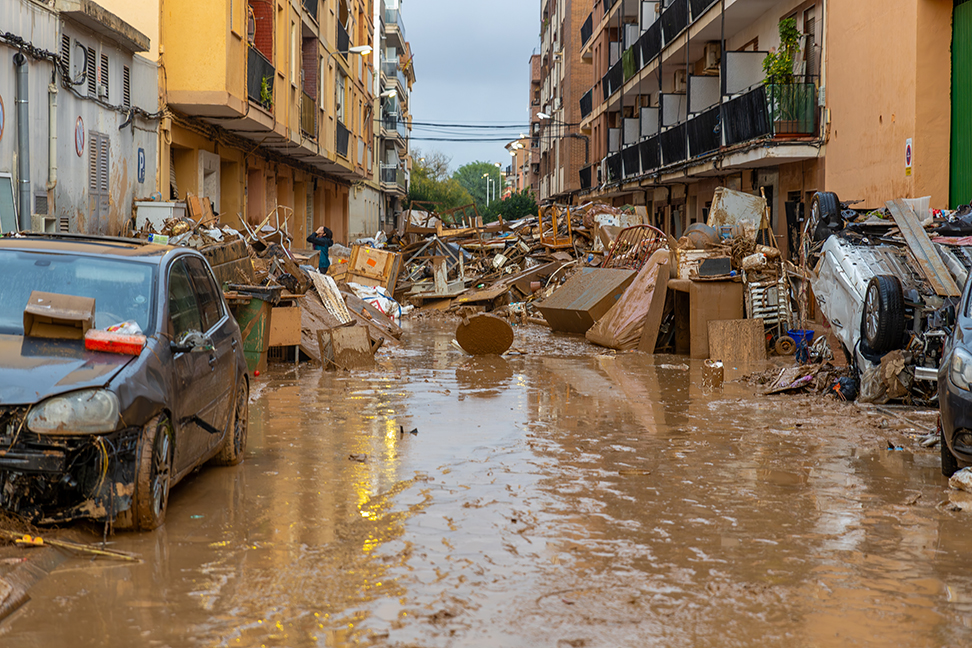
Flash floods can occur within a few minutes or hours of excessive rainfall, causing surface water flooding, river and coastal flooding. Flash floods often have a dangerous wall of roaring water carrying rocks, mud and other debris. Overland flooding, the most common type of flooding event typically occurs when waterways such as rivers or streams overflow their banks as a result of rainwater or a possible levee breach and cause flooding in surrounding areas. It can also occur when rainfall exceeds the capacity of underground pipes, or the capacity of streets and drains designed to carry flood water away from urban areas.

Check flood risk using GOV.UK long-term flood risk service, which helps determine the type of flood insurance coverage. Most UK home insurance includes flood coverage however,
you should always check your policy wording. High risk flood area properties may face: higher premiums, or a higher excess.  The lower the degree of risk, the lower the flood insurance premium.

To prepare for a flood, you should:

KNOW THE TERMS

Flood alert

A flood alert means that flooding is possible so you should prepare now.

Flood alert icon description: a black house with 1 wavy line of water covering the bottom of it, within an orange triangle.

The Environment Agency issues a flood alert when forecasts show that flooding may be possible from:

  • rivers
  • high tides, surges or strong winds at sea

Timeframe

The Environment Agency usually issues a flood alert between 2 and 12 hours before flooding. Flood alerts are usually issued during waking hours where possible.

What you should do

You should regularly check if there’s a flood alert for your area and follow the official advice.

If a flood alert is issued, you should:

  • be ready to follow your flood plan
  • have insurance documents and any medications ready
  • avoid walking, cycling or driving through any flood water
  • move any livestock and farming equipment away from areas likely to flood

What is at risk during a flood alert

The following can be at risk when a flood alert is in force:

  • fields, recreational land and carparks
  • minor roads
  • farmland
  • coastal areas affected by spray or waves overtopping

Flood warning

A flood warning means that flooding is expected so you should act now.

Flood warning icon description: a black house with 2 wavy lines of water covering the bottom of it, within a red triangle.

The Environment Agency issues a flood warning when forecasts show that flooding is expected from:

  • rivers
  • heavy rain that will cause rivers to flash flood
  • high tides and surges coupled with strong winds at sea

Timeframe

The Environment Agency usually issues a flood warning 30 minutes to 2 hours before flooding.

What you should do

You should regularly check if there’s a flood warning for your area and follow the official advice.

If a warning is issued, you should:

  • protect yourself and your loved ones
  • move your loved ones, pets and valuables to a safe place
  • move to higher ground or the upper floor of a building
  • turn off the gas, electricity and water in your home if it’s safe
  • put flood protection equipment in place
  • do as the emergency services tell you
  • help others if it’s safe to do so

Severe flood warning

A severe flood warning means that flooding could cause danger to life and significant disruption to communities. You must act now.

Severe flood warning icon description: a red house with 3 wavy lines of water covering the bottom of it, within a red triangle.

Timeframe

The Environment Agency issues a severe flood warning when flooding threatens life and communities.

What you should do

You should regularly check if there’s a severe flood warning for your area and follow the official advice.

If a severe warning is issued, you should:

  • stay in a safe place
  • be ready to evacuate your home
  • do as the emergency services tell you
  • call 999 if you are in immediate danger
  • if you are caught in a flash flood move to higher ground or the upper floor of a building if it’s safe

If a flood is likely in your area, you should:

  • Listen to the radio or television for information.
  • Be aware that flash flooding can occur. If there is any possibility of a flash flood, move immediately to higher ground. Do not wait for instructions to move.
  • Be aware of stream, drainage channels, canyons and other areas known to flood suddenly. Flash floods can occur in these areas with or without typical warnings such as rain clouds or heavy rain.

If you must prepare to evacuate, you should do the following:

  • Secure your home. If you have time, bring in outdoor furniture. Move essential items to an upper floor.
  • Turn off utilities at the main switches or valves if instructed to do so. Disconnect electrical appliances. Do not touch electrical equipment if you are wet or standing in water.

If you have to leave your home, remember these evacuation tips:

  • Do not walk through moving water. Six inches of moving water can make you fall. If you have to walk in water, walk where the water is not moving. Use a stick to check the firmness of the ground in front of you.
  • Do not drive into flooded areas. If floodwaters rise around your car, abandon the car and move to higher ground, when water is not moving or not more than a few inches deep. You and the vehicle can be swept away quickly.  If your vehicle is trapped in rapidly moving water, stay in the vehicle. If the water is rising inside the vehicle, seek refuge on the roof.
  • Do not camp or park your vehicle along streams, rivers or creeks, particularly during threatening conditions.

Find out more about what to do during a flood.

Your home has been flooded. Although floodwaters may be down in some areas, many dangers still exist. Here are some things to remember in the days ahead:

  • Use local alerts and warning systems to get information and expert informed advice as soon as available.
  • Avoid moving water.
  • Stay away from damaged areas unless your assistance has been specifically requested by police, fire, or relief organization.
  • Emergency workers will be assisting people in flooded areas. You can help them by staying off the roads and out of the way.
  • Play it safe. Additional flooding or flash floods can occur. Listen for local warnings and information. If your car stalls in rapidly rising waters, get out immediately and climb to higher ground.
  • Return home only when authorities indicate it is safe.
  • Roads may still be closed because they have been damaged or are covered by water. Barricades have been placed for your protection. If you come upon a barricade or a flooded road, go another way.
  • If you must walk or drive in areas that have been flooded:
    • Stay on firm ground. Moving water only 6 inches deep can sweep you off your feet. Standing water may be electrically charged from underground or downed power lines.
    • Flooding may have caused familiar places to change. Floodwaters often erode roads and walkways. Flood debris may hide animals and broken bottles, and it’s also slippery. Avoid walking or driving through it.
  • Be aware of areas where floodwaters have receded. Roads may have weakened and could collapse under the weight of a car.
  • Stay out of any building if it is surrounded by floodwaters.
  • Use extreme caution when entering buildings; there may be hidden damage, particularly in foundations.